FrankhoodFrankhood Ai and Machine Learning Icon Cloud Service Icon Digital Marketing Solutions Icon Mobile Development Icon Project and Product Management Icon Quality Assurance Icon Strategic Consulting Icon Web Development IconApproach Identify IconApproach Improve IconApproach Support IconApproach Tailor Icon Approach Understand Icon Planet Dotted IconPlanet Striped IconPlanet Solid IconBullet Quote Pink iconBullet Quote Green iconBullet Quote Blue iconBullet Quote Purple iconBullet Quote Yellow iconFinance iconRetail iconIndustry iconHealth Care iconMarketing iconAi Deep Learning iconAi Computer Vision iconAi Nlp iconAi Predictive icon Ai Data Visualization icon Ai Decision Support System icon

Pan di Stelle - Acchiappa Mooncake

Virtual and reality come together for a flawless User Experience

Pan di Stelle - Acchiappa Mooncake
Customer
Pandistelle
Partner
Imille
Year
2012
Technologies
Django
Python
PostGIS
Open Street Map
GeoDjango

Acchiappa Mooncake (Mooncake Catcher) is a competition organized by the Barilla group through the Pan di Stelle brand, aimed at actively involving its customers by exploring the local area in a playful way.

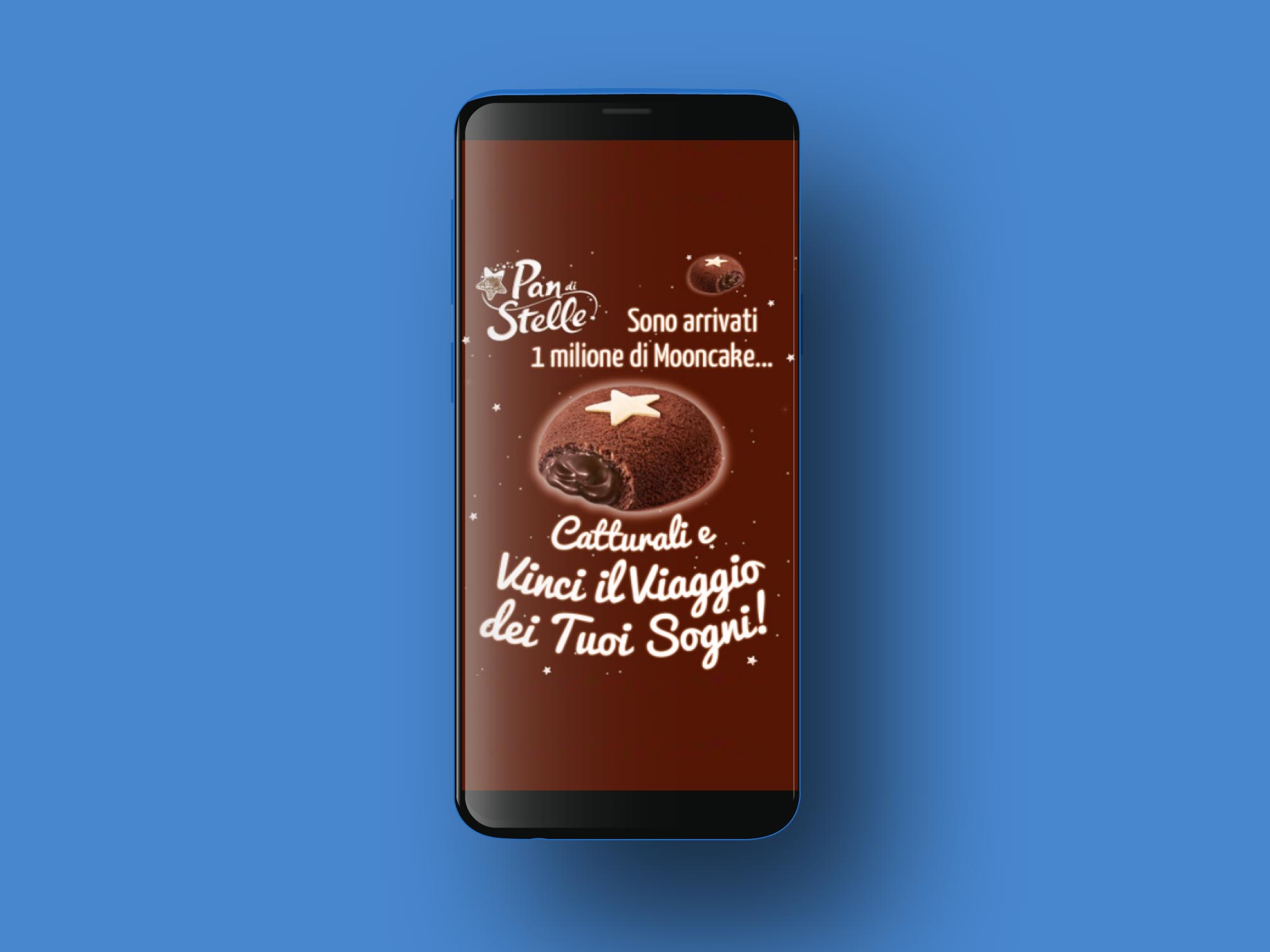
The competition, commissioned by Imille and in force from April 2 to May 31, 2012, was structured as a treasure hunt, inviting the user to find and photograph the cakes scattered virtually in major Italian cities, using their smartphone as a locator. To participate in the contest, simply download the Pan di Stelle Acchiappa Mooncake app from the App Store or Google Play. The mobile app allows the user to find the cakes, visible only through the application, and photograph the tasty snack in digital version to accumulate points, climb the rankings and win prizes. At the end of the competition, the player who has scored the most points wins the final prize, a voucher worth € 10,000 to be spent on the trip of their dreams.
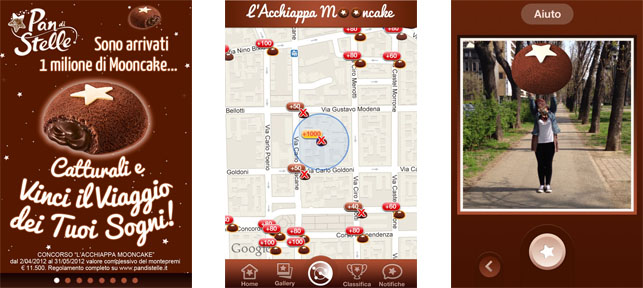
The project effectively combines the dynamics of gamification and augmented reality, exploiting the advantages of communication based on user-generated content, and thanks to this synergy it achieves the objective of generating an active interest in the numerous participants.

The Barilla Group, through its iconic brand, recognizes the central role of the customer-consumer and involves them in an enthralling and fun experiential activity that takes place in the 'trait d'union' between the physical world and virtual reality.

'Acchiappa Mooncake' is one of the most successful projects that Frankhood has ever created. It is a futuristic project: created in 2012 when there was still no trace of augmented reality, it was the precursor of new technologies which are extremely popular today. The application is to be considered in all respects as a precursor to Pokemon Go.

The back-end was made in Python and Django. The most relevant feature of this project is the positioning engine, allowing virtual goods to be displayed across the whole national territory. 

The know-how on GPS accuracy and the use of GIS tools developed over years allowed us to devise the procedures for distributing virtual objects over very large territories (Italy for cakes, and the entire USA for the aforementioned Capture the Pasta). Everything was obtained through the use of geographic and non-geographic data, all publicly accessible. 

In particular, the map data was obtained from archives in OpenSteetMaps format which was subsequently imported into a Postgres database with PostGIS spatial extensions. The road data was suitably filtered on the basis of information on inhabited areas in order to limit pre-processing times and concentrate distribution on inhabited centers. We also planned to avoid distributions on specific areas such as airports, military areas, highways, heavily-trafficked areas, etc.  

The density of the distribution was instead chosen taking into account the positioning errors that can be made by the sensors used on smartphones. Procedures were implemented to verify the bets and catches made by users in order to identify fraud and cheating more easily.

Once distributed by the positioning engine, the system provides a panel for the manual fine-tuning of the coordinates, by displaying the virtual goods on a Gmaps map.  

The project won several awards in 2012 and was replicated in the United States for the Barilla brand.